Twisted Tower Story Overview
A spoiler-light look at Tiny’s climb, Charlotte, and Mr Twister’s broadcast carnival.
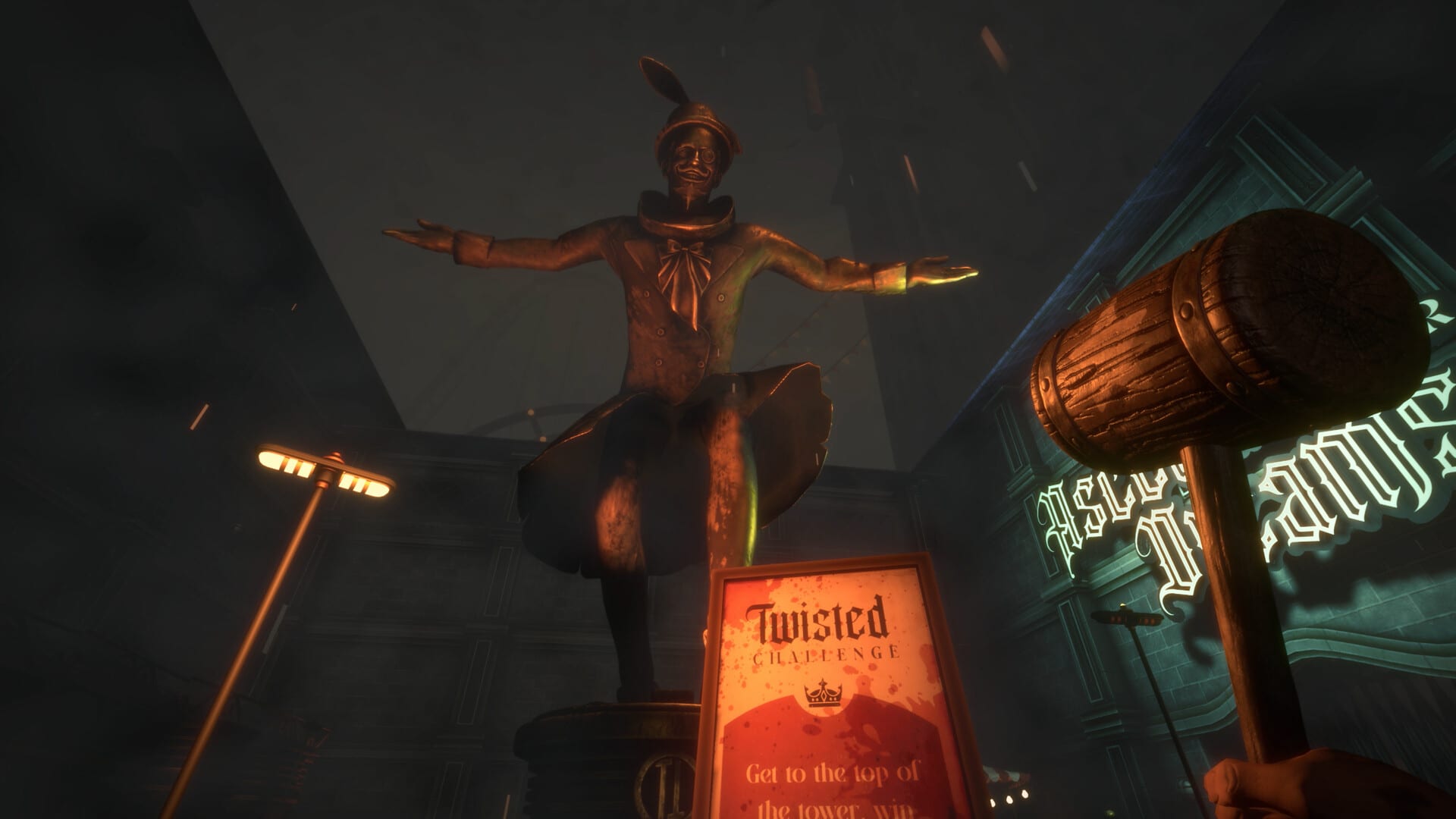
Twisted Tower is not only a first-person carnival shooter. It is also an emotional rescue story wrapped in velvet tickets, bloodfetti, and a deranged gameshow hosted by Mr Twister. This overview stays spoiler-light on purpose. You will learn who Tiny is trying to reach, why Charlotte matters, how the tower’s broadcast fantasy works, and which themes Thomas Brush has publicly described—without ending spoilers or late-floor reveals.
If you want tone and media context first, open the Demo Preview. If you want floor fantasies without plot dumps, use the Levels Overview. For mascot personalities that double as combat lessons, see Enemies and Mascots. Replay structure lives on Adventure Plus. Calendar facts stay on Release Date. Broader guides sit on the Guides Hub.
The pitch in one paragraph
You play Tiny. Tiny climbs a ruined 1950s theme-park tower to find Charlotte. Mr Twister runs the climb like a corrupted carnival gameshow: applause, cruelty, prizes, and questions that cut deeper than the toy guns. Atmos Games, led by Thomas Brush, designs the fantasy; 3D Realms publishes. Steam is the launch home on August 18, 2026, with a free demo already available on Steam and itch.io. The campaign is solo. Consoles are not day-one.
Tiny and Charlotte without the ending
Tiny is the player surrogate who keeps moving upward even when the tower insists the climb is entertainment. Charlotte is the person Tiny is trying to reach—the emotional north star of the rescue story. You do not need a spoiler dump to understand the stakes: someone you care about is somewhere above the bloodfetti, and the tower wants to turn that care into spectacle. Treat every prop, velvet ticket, and broadcast interruption as a breadcrumb, not as a free license to open ending explainers before you finish your first climb.
Mr Twister’s carnival gameshow
Mr Twister is the host fantasy. He does not simply “appear as a boss.” He frames the tower as a show. Rooms feel staged. Mascots feel cast. Applause and neon cruelty sit next to hugs that hurt. The public marketing language around Twisted Tower leans into that gameshow pressure—velvet tickets, broadcast fantasy, and the sense that Tiny is both contestant and prey. When you hear show-business audio cues, ask what the tower wants you to perform, not only what it wants you to shoot.
“Are you worth it?”
In interviews, Thomas Brush has framed a core emotional question around worth: are you worth the climb, the risk, the love, the spectacle? That theme sits under the comedy. Bloodfetti and Miss Fire gags can make players laugh; the question underneath can make them pause. Play the jokes. Still notice when a room asks whether Tiny’s devotion is foolish, noble, or both. Story-aware play is not speedrun play. You can clear a combat dens and still leave five seconds for a prop that answers the worth question without a cutscene.
From Happy Hotel to Art Nouveau carnival
Twisted Tower did not arrive fully formed. Public development notes describe an earlier Happy Hotel direction that evolved into a Disney-inspired Art Nouveau carnival nightmare. The shift matters for how you read the spaces. Hotel corridors still haunt the early climb, but the broader fantasy became carnival kitsch: attractions, mascots, tickets, and showmanship. When you walk a lobby that feels like faded luxury, remember it is also a stage set for Mr Twister’s broadcast. When you enter brighter attraction spaces, remember the Art Nouveau elegance is rotting on purpose.
Velvet tickets and broadcast fantasy
Announcement materials sell a velvet-ticket fantasy—an invitation into a show you may not want to attend. Treat tickets in gameplay as economy, yes, but also as story texture. A ticket is currency for upgrades and a reminder that Tiny is buying deeper into the broadcast. Broadcast fantasy means the tower often behaves like a live feed: hosts, mascots, and staged rooms that want an audience. You are that audience while you shoot. That double role is part of the emotional design.
How to climb without spoiling yourself
- Finish the demo once for tone before hunting theories.
- Note sealed or X-marked doors as future-path foreshadowing, not as bugs.
- Read mascot names and behaviors as character writing, not only DPS checks—Huggee Bear, Ticklin’ Tommy, Mr Quackers, Smiley the Telephone, and Jerry Jiraff all sell personality.
- Save Adventure Plus curiosity for after a full clear; see Adventure Plus.
- Avoid ending streams if you want your first August 18 climb intact.
Story and systems share a spine
Combat, puzzles, and traversal are not separate from the rescue story. A twisting room that forces a pause can also force Tiny to sit with fear. A shop that sells a louder toy gun can also sell the idea that violence is the show’s preferred language. Linking systems pages is not filler: Levels Overview keeps floor metaphors clear, Enemies and Mascots keeps cast readable, and Demo Preview keeps expectations honest before launch.
What this page will not do
This page will not list ending outcomes, romance resolutions, final-floor plot dumps, or “secret true path” charts. Those belong after you play. Spoiler-light means you can learn the emotional contract—Tiny seeks Charlotte; Mr Twister hosts; the tower asks if you are worth it—without knowing how the last applause lands.
Related reading before launch
Keep Release Date bookmarked for the August 18, 2026 Steam window. Return to the Guides Hub when you want walkthrough depth instead of theme. If you only remember three sentences from this overview, remember these: Tiny climbs for Charlotte. Mr Twister turns the climb into a carnival gameshow. The question under the bloodfetti is whether love and courage are worth the spectacle.
Emotional pacing tips for story-aware players
Do not dump every ticket the second a shop opens if a quiet room just asked a hard question. Give yourself thirty seconds. Look at the velvet textures, the poster art, the mascot smiles that are too wide. Then resume the gun-feel fantasy. Story-aware play is still play. It simply refuses to treat Atmos Games’ writing as background noise under 3D Realms marketing trailers.
After the demo, before August 18
Use the free demo to decide whether the tone fits you. Some players want pure action; Twisted Tower also wants feeling. If the broadcast fantasy works for you, plan a first full climb that protects surprise, then a second climb that explores forks through Adventure Plus. That is how the rescue story and the replay systems reinforce each other without spoiling the first ascent.
Frequently Asked Questions
Quick answers to the most common questions.
Who is Tiny looking for in Twisted Tower?
Tiny climbs the tower to reach Charlotte. Exact outcomes are left for your playthrough; this page stays spoiler-light.
Who is Mr Twister?
Mr Twister is the carnival gameshow host fantasy that frames the climb as a cruel, theatrical broadcast.
What does “Are you worth it?” mean?
Thomas Brush has described worth as a core emotional theme under the comedy—love, risk, and spectacle tied together.
Was Twisted Tower always a carnival game?
Public notes describe an earlier Happy Hotel direction that evolved into a Disney-inspired Art Nouveau carnival nightmare.
Where should I go next without spoilers?
Read Demo Preview, Levels Overview, Enemies and Mascots, and Adventure Plus, then check Release Date for launch timing.