Twisted Tower Puzzles and Traps
How environmental puzzles, traps, and twisting rooms pace the carnival climb.
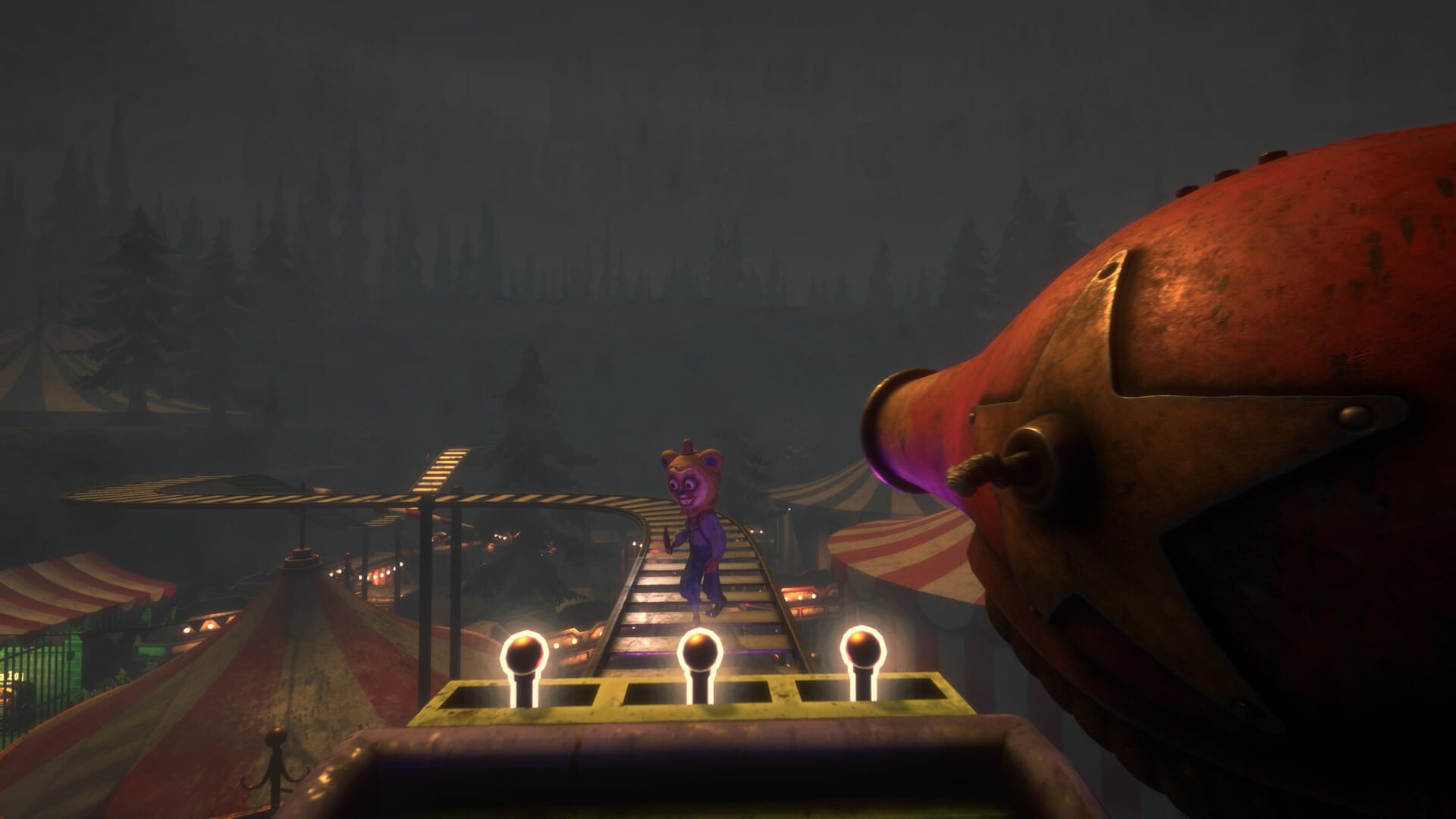
Twisted Tower mixes gun-feel carnival combat with environmental puzzles and deadly traps. Rooms twist. Paths reopen. Elevator keys and tokens gate vertical progress. X-marked doors tease future forks you cannot force open yet. This guide explains how to read those spaces, how to conserve ammo while thinking, and how puzzle pacing sits beside combat—without pretending every launch-day puzzle list is final after the August 18, 2026 launch.
Pair this page with Traversal and Mobility for jump, dash, and grapple habits. Use the Demo Walkthrough when you want a concrete early-floor clear. Refresh fight habits on Combat Tips. Keep floor fantasies aligned with the Levels Overview. New players should still start from Getting Started.
Environmental puzzles, not busywork
Atmos Games designs puzzle rooms as part of the tower fantasy, not as filler between mascot packs. Expect levers, blocked routes, multi-room loops, and props that must be noticed under carnival lighting. Inspiration talk around Twisted Tower has referenced BioShock- and Metroid-flavored space reading: look up, look back, notice what changed after a fight. If a room feels “done,” walk the perimeter once more before you spend tickets at the next shop.
Deadly traps as punctuation
Traps are punctuation, not random cruelty. Spikes, drops, timed hazards, and carnival machinery teach you to slow your sprint. Treat a trap death as information: which audio cue fired, which floor panel looked wrong, which neon strip blinked before the kill. Then clear the same space with a calmer camera. Panic sprinting is how players turn a solvable room into a softlock of frustration.
Twisting rooms and spatial literacy
Twisting rooms are a signature fantasy. Geometry that reorients mid-climb forces you to rebuild a mental map. BioShock-style environmental storytelling and Metroid-style backtracking literacy both apply: mark landmarks, remember sealed doors, and notice when a new traversal toy suddenly makes an old ledge useful. If a room rotates or rewires after an objective, re-scout before you assume the old route still works.
Elevator keys, tokens, and vertical gates
Elevator keys and tokens are vertical grammar. They tell you the tower wants a checkpointed climb, not an infinite free roam from minute one. When you find a key-like object, ask three questions: Does this open the next elevator? Does it unlock a side wing? Does it only foreshadow a later Adventure Plus fork? Do not eat every shiny pickup into the first locked door you see—some gates are story timing, not skill checks.
X-marked doors as future paths
X-marked doors in the demo and first run are often closed on purpose. They foreshadow branching paths and Adventure Plus rather than broken collision. Note them. Screenshot them if you want. Do not softlock yourself trying to clip through. Your second climb—or Adventure Plus unlock after a full clear—is when those marks become invitations. Until then, treat the X as a promise, not a bug report.
Combat-plus-puzzle pacing
Twisted Tower rarely wants pure puzzle silence for long. Expect combat dens to interrupt thinking, then quiet rooms to interrupt shooting. That rhythm protects both systems. After a loud Huggee Bear or Ticklin’ Tommy fight, give yourself thirty seconds before yanking every lever in sight. After a puzzle clear, reload and check ammo before you open the next combat door. Pacing is a skill.
Ammo conservation in puzzle rooms
Puzzle rooms tempt players to spray leftover rounds at props “just in case.” Resist that habit. Ammo is for mascots—Huggee Bear, Ticklin’ Tommy, Mr Quackers, Smiley the Telephone, Jerry Jiraff—and for emergencies when a trap drops you into an ambush. Walk first. Look second. Shoot third. If a prop only reacts to interaction, your magazine is safer full. Carry the same discipline into the next combat dens so you are not begging the shop for tickets you already spent on panic upgrades.
A practical room checklist
- Enter and stop. Name the room fantasy in one word.
- Scan for traps at floor and ceiling height.
- Note X-marked or sealed doors without forcing them.
- Locate interactables before you reload-spend into a fight.
- After the objective, re-walk the loop once for keys, tokens, and missed tickets.
- Leave only when the elevator grammar is clear.
How puzzles teach traversal
Many puzzle clears are secretly traversal tutorials. A ledge you ignored becomes mandatory after a dash unlock. A gap that looked cosmetic becomes a grapple line. That is why this page and Traversal and Mobility should stay open together. Puzzle literacy without mobility literacy leaves players staring at solved switches with no route upward.
Demo habits that still matter at launch
The free demo already teaches trap respect, sealed-door patience, and combat-puzzle rhythm. Keep those habits on August 18, 2026 even when new floors—hotel, waterpark, clown casino, carnival forest, space station—expand the toy box. New puzzle skins will appear; the reading method stays. If a room references Miss Fire humor or bloodfetti spectacle, enjoy the joke, then still check the floor for spikes.
Related pages for a complete climb
Return to Getting Started if systems still feel foggy. Use the Demo Walkthrough for guided early clears. Sharpen fights with Combat Tips. Keep spatial themes honest via Levels Overview. Mobility details live on Traversal and Mobility.
Mindset: curiosity over brute force
Brute-forcing every door with bullets wastes the Atmos Games design. Curiosity—looking, listening, backtracking one loop—solves more rooms than a emptied magazine. 3D Realms markets the gun fantasy hard, and the gun fantasy is real, but puzzle rooms are where Tiny proves patience as much as aim. Climb smart. Leave the X for later. Keep ammo for the show’s next cruel punchline.
Frequently Asked Questions
Quick answers to the most common questions.
Are Twisted Tower puzzles separate from combat?
Usually no. Expect combat dens and puzzle rooms to interrupt each other so pacing stays mixed.
What are X-marked doors for?
They often foreshadow future branching paths or Adventure Plus routes. Do not force them on the first climb.
Should I shoot props during puzzle rooms?
Only when interaction clearly fails. Conserve ammo for mascots and trap ambushes.
How do elevator keys work?
Keys and tokens gate vertical progress. Confirm whether a pickup opens the next elevator, a side wing, or later content.
Which guides pair with this page?
Traversal and Mobility, Demo Walkthrough, Combat Tips, Levels Overview, and Getting Started.